|
This week I spoke to LBC and national media about the Government's expansion of alcohol monitoring tags for offenders whose drinking has been linked to criminal behaviour.
The tagging debate often focuses on offenders but I believe we should start with protecting victims and preventing crime.
Behind every alcohol-fuelled assault, incident of domestic abuse, act of anti-social behaviour or violent crime is someone who have been harmed by the actions of another.
My Police, Crime and Justice Plan is built around clear commitments to prevent crime and anti-social behaviour, protect our communities, deliver a first-class service to victims and reduce reoffending. Tackling alcohol-related crime and harm sits at the heart of those priorities.
Alcohol harm costs the North East almost £1.5 billion every year, including more than £812 million linked to crime and disorder alone. Nationally, alcohol-related harm costs England £27.4 billion annually, while almost four in ten victims of serious violent crime believe alcohol played a part in what happened to them.
Residents across County Durham and Darlington repeatedly tell me about the impact of alcohol-related anti-social behaviour, violence, and disorder on their communities. Whether it is town centre disorder, alcohol-related violence, the pressure placed on our emergency services, the consequences are felt by victims, families, and neighbourhoods across the force area. Balance North East estimates that up to 80% of weekend arrests and A&E attendances at peak times are alcohol-related, while more than 700,000 alcohol-related violent incidents occur every year.
We also know incidents of domestic abuse can increase around major sporting events, particularly where alcohol is involved. A football match should never become an excuse for violence behind closed doors. But if we are serious about creating safer communities, we cannot ignore one of the key drivers of offending.
That is why I support evidence-based interventions that help break the cycle.
Alcohol monitoring tags are one example. Worn around the ankle, they monitor alcohol consumption 24 hours a day by analysing alcohol levels in a person's sweat. They are used where courts or probation services have determined that alcohol contributed to criminal behaviour and that abstinence is necessary to reduce the risk of further harm.
This is not a small-scale initiative. Around 7,300 offenders are expected to wear alcohol monitoring tags during this summer's World Cup alone, supported by more than £180 million of Government investment in electronic monitoring technology.
These tags are not a soft option. If offenders drink alcohol when prohibited from doing so, or attempt to tamper with the device, probation services are alerted and action can follow, including being returned to court or recalled to prison. Tagged offenders comply with their alcohol bans for around 97% monitored days.
But tags alone are not enough. They work best when combined with treatment, recovery services and rehabilitation. Accountability and support must go hand in hand if we are to tackle the root causes of offending and reduce reoffending.
Every assault prevented means one less victim. Every incident of anti-social behaviour prevented means one less community affected. Every offender who breaks the link between alcohol, drugs and crime is one less person returning to the criminal justice system.
That is why tackling alcohol and drug-related crime remains a priority for me. The best victim service is not picking up the pieces after a crime has happened. It is stopping that crime from happening in the first place. 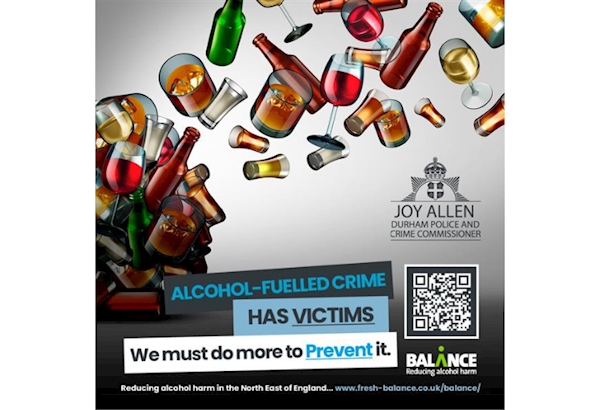
|